Is Your Beautiful Pond Suddenly Green, Slimy, and Smelly?
Pond digging companies: Discover why your pond turns into a mucky green swamp and how to fix it fast. Get expert tips and book a professional cleanup today. If your pond water has shifted from clear to green, and you are battling algae blooms, sludge, or foul odors, you are not alone. Many Wisconsin property owners deal with ponds that look and smell like a swamp by late summer. The good news is that a green pond is fixable. With the right balance of cleanup, circulation, shoreline protection, and depth management, your water can be healthy again. Below, our team at RLP Diversified, Inc explains what causes the mess, how to act now, and when to bring in a pro to restore your pond for the long haul.
What Causes a Pond to Turn Green and Mucky?
Nutrient Overload From Runoff
Excess nitrogen and phosphorus feed algae. When fertilizer, grass clippings, or animal waste wash into your pond, algae thrive. Stormwater from lawns, fields, and driveways carries these nutrients straight to the water, especially if there is no buffer strip or shoreline stabilization in place.
Stagnant or Low-Circulation Water
Still water warms up and loses oxygen. Warm, low-oxygen water favors algae and creates a cycle of decay. Without circulation from inflow, outflow, aeration, or a proper pond shape, organic matter builds and fuels more growth.
Shallow Depth and Poor Shape
Shallow ponds heat up fast and let sunlight reach the bottom. Sunlight plus nutrients equals algae. Many older ponds silt in over time, becoming shallower and flatter. This creates ideal conditions for a summer swamp look.
Sludge, Leaves, and Decaying Organics
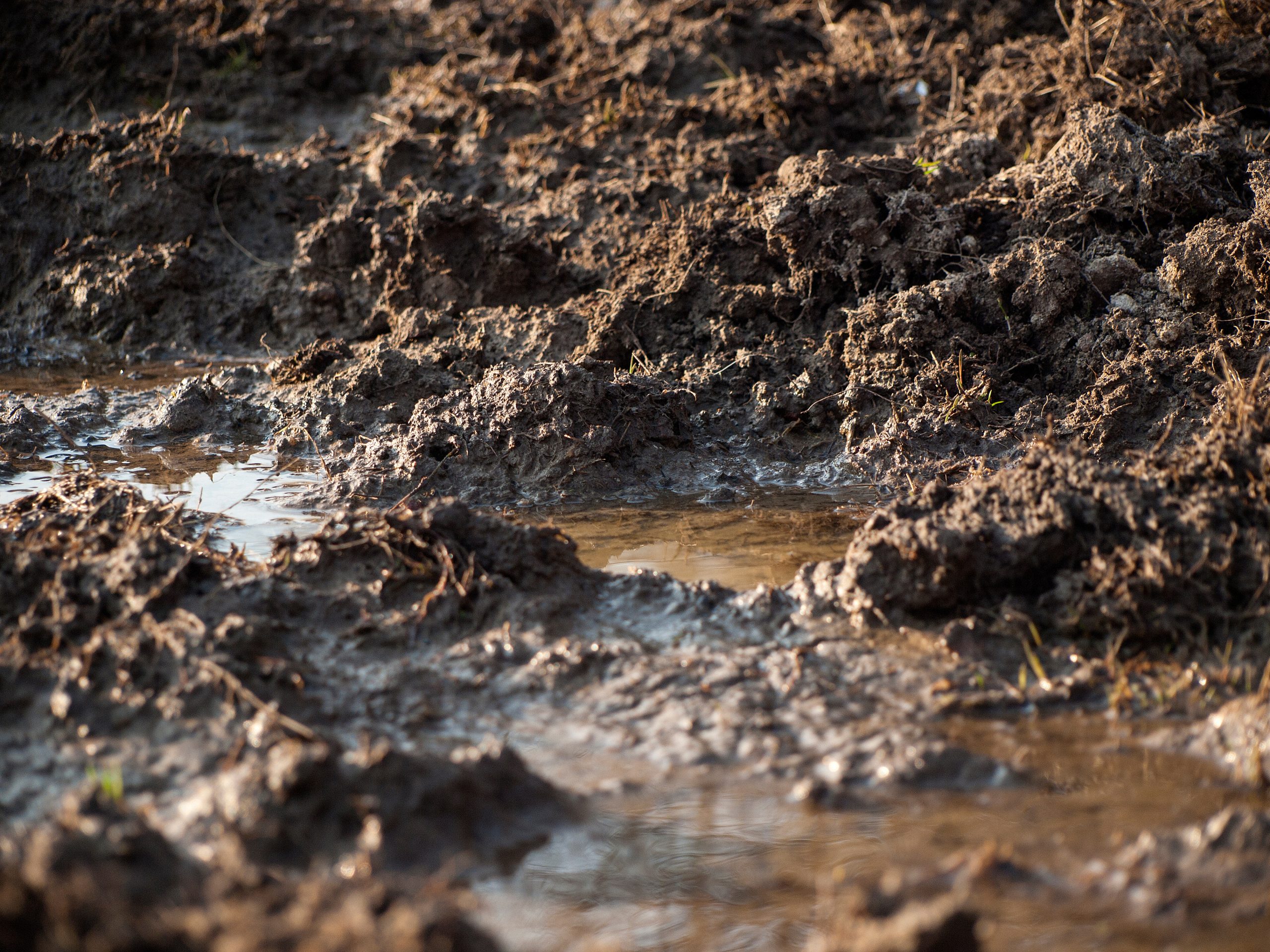
Every season, leaves, grass, and dead algae settle to the bottom. This sludge releases nutrients and lowers oxygen as it rots. Thick muck also makes the pond look dark and murky even when algae are not blooming.
Erosion and Sediment Wash-In
Unprotected shorelines collapse and send sediment into the pond. Sediment makes the water cloudy and fills the bottom, choking out depth and habitat. It also carries attached nutrients that feed algae.
Too Many Fish or Unbalanced Stocking
Overstocked fish increase waste and stir up bottom sediments. That cloudy water blocks healthy plants and can push the system out of balance. The result is more algae and more smell.
Sunlight and Temperature Swings
A full-sun pond without shade can heat up fast, especially in July and August. Warmer water holds less oxygen, which stresses fish and tilts the pond toward algae and decay.
Contaminants and Household Inputs
Soaps, salt, and even a leaking septic system can cause major water quality problems. If your pond sits near driveways, barns, or older septic fields, contamination may be adding to the swamp effect.
Warning Signs You Should Not Ignore
- Pea soup water or stringy algae mats
- Black or gray sludge on the bottom that smells like sulfur
- Dead fish or fish gasping at the surface
- Cloudy water after rainfall
- Shoreline erosion, undercut banks, or slumping soil
- Quick algae blooms that crash and return
- Floating debris caught in corners with no flow
Quick Fixes You Can Start Today
Some simple steps can slow the green tide while you plan long-term improvements.
- Skim and remove floating algae and debris to reduce nutrient recycling.
- Stop fertilizing within 30 feet of the shoreline and sweep grass clippings away from water.
- Create a 10 to 25 foot no-mow buffer strip with native grasses and plants to filter runoff.
- Install an aeration system or surface fountain to add oxygen and circulation.
- Add shade where possible with native shrubs or strategic trees on the south and west sides.
- Check downspouts, driveways, and paths that may be channeling runoff straight into the pond.
- Review fish stocking and feeding habits to reduce waste.
Long-Term Solutions That Actually Work
Lasting pond health is about structure, flow, and shoreline strength. Pond digging companies like RLP Diversified, Inc can help you design and execute a plan tailored to your site.
- Dredging to remove nutrient-rich muck and restore depth.
- Reshaping slopes to improve circulation and reduce stagnation zones.
- Building deeper refuge areas to keep water cooler and oxygenated in summer.
- Stabilizing shorelines with rock, native plantings, or engineered solutions.
- Installing proper inflow and outflow structures to manage water levels.
- Adding forebays or sediment traps to capture silt before it reaches the main pond.
- Constructing vegetated swales or rain gardens in the watershed to filter runoff.
- Periodic maintenance dredging or skimming to prevent sludge return.
How Dredging and Reshaping Restore a Pond
Dredging is the most direct way to remove the nutrient-rich muck that feeds algae. With the right equipment and experienced operators, dredging can quickly improve water clarity, restore depth, and increase oxygen. RLP Diversified, Inc uses proven excavating methods, including hydraulic and mechanical dredging strategies, to handle both residential and commercial ponds safely and efficiently. We operate Caterpillar, Bobcat, and New Holland equipment that lets us work precisely and responsibly.
Reshaping matters just as much as removal. When the bottom is sculpted with varied depths and gentle underwater slopes, you reduce warm shallows and dead zones where algae thrive. Strategic deepening creates cooler summer refuges and improves circulation. Adding a sediment forebay at the pond inlet captures incoming silt, so the main basin stays clear longer. The end result is a more resilient pond that fights off algae naturally.
Shoreline Protection Stops the Cycle
If your shoreline keeps washing into the water, your pond will keep getting shallower and greener. Installing proper shoreline stabilization is critical. RLP Diversified, Inc removes failing seawalls and replaces them with stable, long-lasting solutions. Options include riprap stone, tiered native plantings, or engineered systems that combine structure with habitat. The right approach depends on your soil, slope, wave action, and water level fluctuation. The payoff is strong banks, less sedimentation, better water clarity, and a healthier ecosystem.
When to Bring in Pond Digging Companies
DIY steps help, but some symptoms signal you should call a professional.
- A foot or more of muck across the bottom with thick black sludge
- Rapid algae blooms despite buffers and aeration
- Shoreline failure, undercut banks, or collapsing areas
- Serious sediment inflow after every storm
- Fish kills or chronically low oxygen levels
- Outdated or failing inflow and outflow structures
- Need for permits, disposal planning, or heavy equipment
This is where experienced pond digging companies make the difference. RLP Diversified, Inc has been grading and excavating since 2000 and expanded its capabilities by integrating Andy’s Excavating in 2013. Our team brings statewide experience to pond construction, dredging, reshaping, and shoreline protection. We back our work with reliable equipment, trained operators, and clear communication from start to finish.
Why Choose RLP Diversified, Inc Among Pond Digging Companies
We are a Wisconsin-based contractor with a full suite of grading and excavating services. Our pond excavating team handles new pond construction, dredging and maintenance, and shoreline protection, along with removal of old seawalls. We also offer road grading, rough and finish grading, demolition, and aggregate delivery. That range means we can manage everything your site needs, from access roads and forebays to final seeding.
- Comprehensive pond solutions from survey to final restoration
- Industry-standard equipment from Caterpillar, Bobcat, and New Holland
- Aggregate and trucking to supply topsoil, sand, stone, gravel, and limestone
- Grading expertise to shape basins that promote circulation
- Demolition and site cleanup, including concrete recycling when needed
- Statewide service across Wisconsin with local knowledge of soils and permitting
Our clients choose RLP Diversified, Inc because we deliver practical solutions that last. We balance cost, speed, and long-term performance so your pond stays clear and enjoyable season after season.
Our Step-by-Step Pond Restoration Process
- Site evaluation and goals. We walk the site, test depth and muck thickness, check inflow and outflow, and define clear goals for clarity, habitat, and maintenance.
- Watershed and shoreline plan. We identify runoff sources and shoreline weak points, then design buffers, forebays, and stabilization methods to stop the sediment and nutrient cycle.
- Excavation strategy and access. We plan equipment access, staging, and sediment handling. If dredging is needed, we decide on hydraulic or mechanical methods based on the site.
- Dredging and reshaping. We remove sludge and sediment, deepen key zones, and sculpt the bottom for better flow and cooler summer water.
- Stabilization and protection. We install riprap, native plantings, or engineered shoreline systems. We may add inlet forebays, swales, or level controls.
- Finishing and restoration. We spread topsoil, seed, and stabilize disturbed areas. We also provide maintenance guidance and schedule check-ins if desired.
- Follow-up and maintenance. We can return to clean forebays, refresh buffers, and advise on aeration and stocking to keep your pond clear.
Practical Tips to Keep Your Restored Pond Clear
- Maintain a no-mow buffer strip around the shoreline with native grasses and flowers.
- Clean forebays or sediment traps annually so they keep working.
- Skim leaves in fall to limit organic buildup.
- Use aeration to support oxygen and reduce stratification during hot months.
- Stock fish responsibly and avoid overfeeding.
- Direct roof and driveway runoff through vegetated swales rather than straight pipes.
- Schedule periodic inspections of banks and structures, especially after big storms.
Common Questions About Green Ponds
Do chemicals fix a green pond?
Chemicals can provide a short-term cosmetic fix but do not solve root problems like sludge, shallow depth, or nutrient inflow. Lasting clarity comes from removing muck, reshaping the basin, and protecting the shoreline and watershed. Pond digging companies like RLP Diversified, Inc focus on structural fixes first, with treatments only as a supplement.
How deep should a pond be to stay clear?
It depends on size, sun exposure, and goals, but many Wisconsin ponds benefit from 8 to 12 feet in key areas, plus varied depth zones. Deeper water stays cooler and resists algae. We can evaluate your site and recommend the right profile.
Will dredging harm fish and wildlife?
When planned and timed correctly, dredging can improve habitat. We stage work to protect sensitive areas, retain refuge zones, and schedule during low-impact periods. The result is better oxygen, clearer water, and a healthier ecosystem.
How long will results last?
With proper shoreline protection and watershed controls, dredging and reshaping can keep a pond clear for many years. Maintenance may include cleaning forebays, trimming buffers, and periodic checks after major storms.
Can you help with permits and sediment disposal?
Yes. RLP Diversified, Inc assists with permitting and coordinates responsible sediment handling and disposal. Our team understands local requirements across Wisconsin.
What if my pond is on a farm or near a driveway?
We can incorporate runoff controls like vegetated swales, stone check dams, and forebays to reduce sediment and nutrients. Our aggregate and trucking team can supply stone and gravel to build durable, low-maintenance solutions.
RLP Diversified, Inc Services That Support Healthy Ponds
Because ponds are part of a larger site system, it helps to have one contractor handle everything. RLP Diversified, Inc offers grading and earthmoving, pond excavating, demolition, and aggregate delivery under one roof. From stripping topsoil to backfilling, building access roads, or stabilizing banks, we streamline the process. Our crews can seed lawns and establish native buffers so your pond protection starts working right away.
Where We Work in Wisconsin
RLP Diversified, Inc serves the entire state with a focus on communities such as Milwaukee, Waukesha, Madison, Racine, Mequon, Kenosha, and Green Bay. Whether you are restoring a residential pond, building a new water feature, protecting a shoreline, or deepening an irrigation pond for a farm, we bring the right equipment and team to your site.
How We Compare to Other Pond Digging Companies
Many pond digging companies can move dirt. We do more. RLP Diversified, Inc combines excavation, grading, trucking, and shoreline stabilization with a practical, site-wide approach. We look at your watershed, not just the basin, to stop the cycle of sediment and algae. Our equipment lineup and experienced operators let us work efficiently and safely. We back this with clear communication, transparent planning, and a focus on long-term results.
Get Your Pond Back: Clear, Healthy, and Low Maintenance
If your pond looks like a mucky green swamp, you do not have to live with it. The path to clear water is simple: remove the muck, reshape for circulation and depth, and protect your shoreline and watershed. Start with practical steps like skimming and buffers, then schedule a professional assessment to map out dredging and stabilization. RLP Diversified, Inc will help you plan smart improvements that fit your budget and timeline.
Take the Next Step Today
- Schedule a site visit to assess depth, muck, and shoreline conditions.
- Get a clear plan for dredging, reshaping, and stabilization.
- Bundle grading, aggregate, and restoration for cost savings and speed.
Reach out to RLP Diversified, Inc to turn your pond from green and mucky to clear and healthy. We are ready to design and deliver a solution that lasts. When you want a partner you can trust among pond digging companies, choose the team with statewide experience and a full suite of services. Your pond can be beautiful again, and it can stay that way for years to come.

Leave A Comment