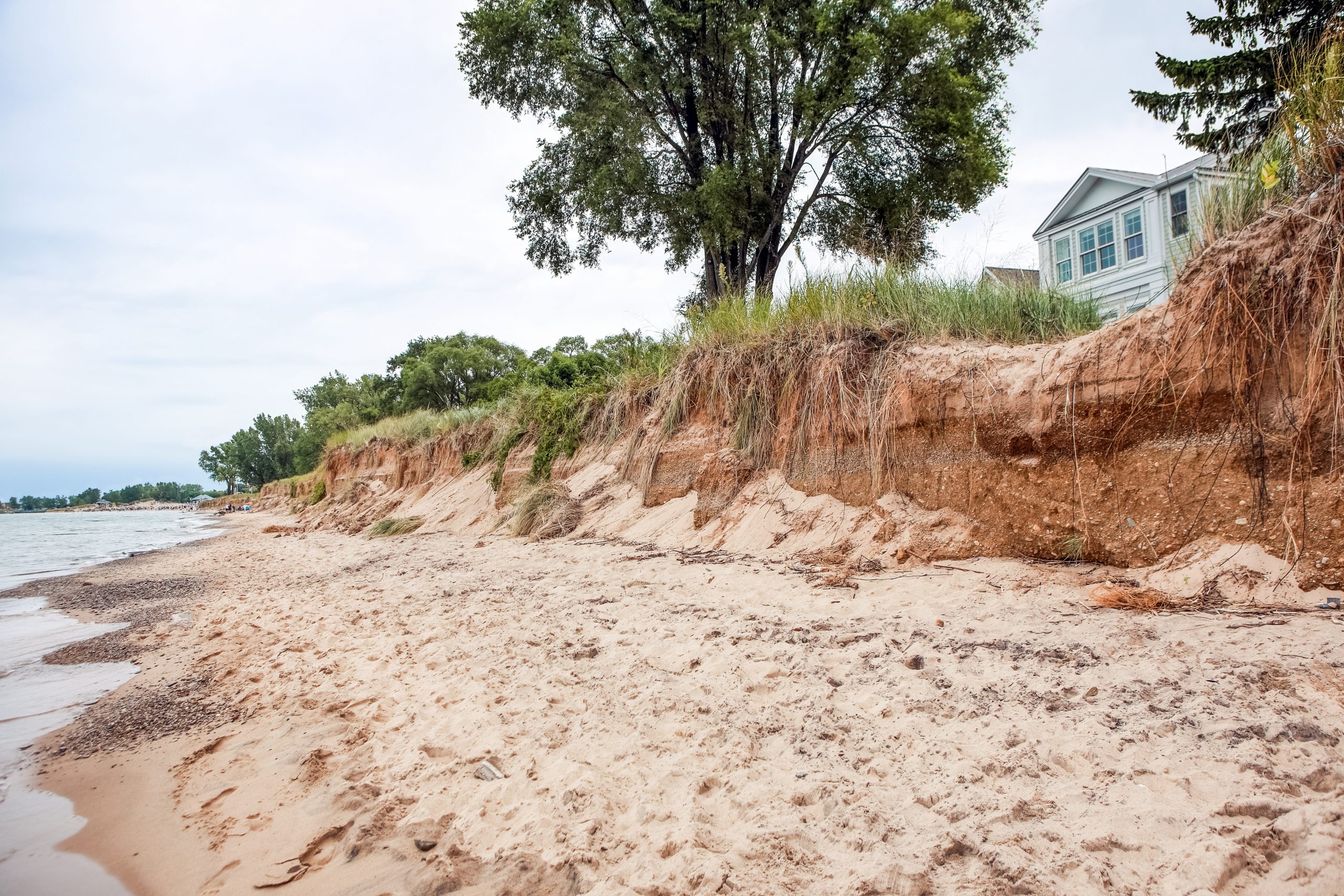
Shoreline restoration can stop erosion. Learn why your shoreline is disappearing into the lake and how to protect it – get expert tips and schedule a consult today.
If waves seem a little higher each season and your lawn keeps getting smaller, you are not imagining it. Lakes and ponds across Wisconsin are experiencing shoreline erosion that eats away at banks, deposits sediment into the water, and puts homes and structures at risk. The good news is that practical shoreline restoration can stop the loss and rebuild a stable, beautiful edge. At RLP Diversified, Inc in Burlington, Wisconsin, we help property owners diagnose the true causes of erosion and deliver long-lasting stabilization that fits each site and budget.
What Causes Shoreline Erosion?
Erosion is the natural process of soil moving from one place to another. On a shoreline, a mix of water, wind, ice, and human activity speeds that process up. Understanding the forces at work on your specific property is the first step to an effective solution.
- Waves and boat wake: Repeated wave action pulls fine soil particles out of the bank. Boat traffic often intensifies the problem on otherwise calm lakes.
- Ice push and thaw cycles: In winter, ice expands and contracts. That movement shoves against the bank and can heave rock or concrete out of alignment.
- Stormwater runoff: Roof downspouts, driveways, and compacted lawns send fast-moving water to the edge. That flow undercuts banks and creates gullies.
- Loss of deep-rooted vegetation: When turf grass replaces native plants, roots are too shallow to hold soil. Bare patches magnify the effect.
- Steep, over-steepened slopes: Banks that are too vertical slump under their own weight, especially when water levels rise and fall.
- Soil type and groundwater: Sandy or silty soils erode faster than clay. Seeping groundwater can cause internal slumping behind the face of the bank.
- Failing seawalls: Older concrete or timber walls can crack, tilt, or lose backfill, which accelerates erosion at the edges and toe of the wall.
- Animal activity: Muskrats and other burrowing animals weaken banks with tunnels that collapse over time.
Because several factors often act together, a site visit is critical. RLP Diversified, Inc evaluates wave exposure, soil conditions, drainage, and access before recommending a shoreline restoration plan.
Early Warning Signs Your Shoreline Needs Help
Catching problems early saves money and protects water quality. Look for these signs.
- Receding lawn edges or exposed tree and shrub roots
- Small slumps or sinkholes behind a seawall or stone edge
- Cloudy water near your property after storms
- Gullies where downspouts discharge
- Stones sliding down the bank or a wall leaning lakeward
- Bare soil where turf used to grow
If you notice any of these, schedule a consultation. Many issues can be reversed with a targeted shoreline restoration approach.
Why Quick Action Matters
Delaying fixes allows damage to compound. As banks retreat, trees tip, patios crack, and septic systems or walkways can be threatened. Sediment from your yard ends up in the lake, where it feeds algae and harms habitat. In addition, erosion control projects are almost always more affordable before a major failure. Fast action lets you choose the right season for work, secure permits on time, and take advantage of lower water levels when possible.
Shoreline Restoration Options That Work in Wisconsin
There is no single fix for every shoreline. Effective restoration often blends several methods so the system works with the lake, not against it. Below are common measures we design and install across Wisconsin.
Bioengineering and Nature-Based Solutions
Bioengineering uses living plants and natural materials to stabilize soil. When designed correctly, these systems blend into the landscape, support fish and wildlife, and handle waves and ice very well.
- Native deep-rooted plants: Species like blue flag iris, sedges, rushes, and shrubs send roots deep into the bank. They knit soil together and absorb runoff.
- Coir logs and fiber rolls: Coconut fiber logs placed at the toe of the bank break wave energy and hold soil while plants establish.
- Live stakes and fascines: Willow or dogwood cuttings are installed directly in the bank. They root, sprout, and create a living edge.
- Brush layering and brush mattresses: Layered branches and live cuttings add structure and reduce surface erosion on steeper slopes.
These practices are ideal for moderate energy sites and are often paired with strategic stone at key points for extra durability.
Stone Riprap and Boulder Revetments
When wave energy is high or slopes are steep, a properly graded bank with filter fabric and angular stone offers proven protection. The key is engineering the system so it drains and resists ice and wave forces without scouring at the base.
- Grading the slope: Over-steep slopes are reshaped to a stable angle. This spreads out wave impact and reduces slumping.
- Filter fabric and bedding stone: Geotextile fabric keeps fine soils in place while allowing water to drain. Smaller bedding stone creates a stable base for larger armor stone.
- Angular limestone riprap: Durable, fractured rock locks together to resist movement. We size stone to wave energy and ice conditions.
RLP Diversified, Inc sources and delivers the right limestone and gravel with our aggregate and trucking services. Our equipment from Caterpillar, Bobcat, and New Holland helps us place stone with precision while protecting your yard.
Seawall Replacement vs Repair
Many older seawalls were not built with modern drainage or toe protection. If a wall is leaning or losing backfill, a full replacement or a hybrid edge may be the best long-term investment. Often, a sloped riprap revetment or a bioengineered bank can replace a failing wall and provide better performance with less maintenance. Where a vertical face is necessary, we focus on updated drainage, proper backfill, and toe support to reduce future issues.
Drainage and Upland Controls
Stopping erosion at the waterline is not enough if upland water keeps rushing down the bank. Managing runoff is a must for lasting results.
- Redirect downspouts into rain gardens or infiltration areas
- Install level spreaders to slow and spread runoff before it hits the edge
- Use permeable surfaces for walks and patios where possible
- Restore turf near the shoreline to deep-rooted native plantings
RLP Diversified, Inc handles grading and earthmoving to reshape swales, add topsoil, and seed with erosion control blankets where needed. This complete approach extends the life of your shoreline restoration.
Beach and Pond Shorelines
For sand beaches or private ponds, the principles are similar but the details differ. We stabilize banks, dredge accumulated sediment when permitted, and use plantings suited to calmer water. Our pond excavating team manages both new pond construction and shoreline protection, including removal of old seawalls and installation of modern stabilization.
Our Shoreline Restoration Process
A clear, step-by-step process leads to predictable results. Here is how RLP Diversified, Inc guides you from first call to finished shoreline.
- Site visit and assessment: We walk the property with you, review problem areas, take measurements, and discuss your goals for access, appearance, and habitat.
- Wave and soil evaluation: We assess exposure to wind and boat traffic, test soil conditions where needed, and review groundwater and drainage.
- Concept design and budget: We propose options from bioengineering to riprap or hybrid systems, with transparent budget ranges.
- Permitting support: We help navigate Wisconsin Department of Natural Resources permits and local shoreland zoning. We prepare drawings and documentation as required.
- Final design and schedule: Once permits are in process, we finalize materials, mobilization plan, and timeline.
- Construction and stabilization: Our crew grades banks, installs fabric, stone, and structural elements, and completes planting. We use erosion controls to protect water quality during work.
- Punch list and education: We walk the finished project with you and provide simple care guidelines for plants and shoreline features.
- Optional maintenance: Seasonal inspections, plant replacement as needed, and minor touch-ups keep your shoreline performing for years.
What to Expect During Construction
Safe access and thoughtful staging are critical on waterfront properties. RLP Diversified, Inc plans equipment paths to limit lawn disturbance, uses construction mats when helpful, and cleans up daily. We coordinate barge or water-based delivery if lake access is required. On most residential shorelines, active construction lasts one to two weeks, followed by plant establishment across the growing season. We recycle concrete and asphalt when we complete demolition to reduce waste and cost.
How Much Does Shoreline Restoration Cost?
Every shoreline is unique, so costs vary. The big drivers are wave energy, slope steepness, access for equipment, the length of shoreline, and the chosen solution. In general, bioengineered systems are cost-effective for moderate energy sites, while heavy stone revetments and seawall replacements cost more due to material and labor. Smart upland drainage work can prevent repeat costs later. We provide clear, itemized estimates so you can weigh options and choose the approach that makes sense over the long term.
Permits and Regulations in Wisconsin
Work below the ordinary high-water mark usually requires a permit through the Wisconsin Department of Natural Resources. Counties and towns also have shoreland zoning rules that can affect slope, vegetation, and structure placement. Many common shoreline restoration projects qualify for general permits if they meet best practices. RLP Diversified, Inc helps clients prepare the right documentation and coordinate with regulators so projects proceed smoothly and legally.
Maintenance Tips for a Long-Lasting Shoreline
After your shoreline is restored, simple care keeps it strong and attractive.
- Water new plantings until established and replace any that do not take
- Do not mow right to the edge; keep a band of native plants at the shoreline
- Redirect or slow runoff from roofs and driveways
- Check after big storms for any displaced stones or washouts
- Limit foot traffic in sensitive areas and use defined access paths
- Schedule a professional checkup every few years or after severe ice events
Why Choose RLP Diversified, Inc
RLP Diversified, Inc has served Wisconsin since 2000 with a focus on grading, excavating, and water-related earthwork. After integrating Andy’s Excavating in 2013, our team expanded capabilities from small residential projects to large commercial work statewide. We deliver end-to-end shoreline restoration, from design and permitting to final planting and cleanup.
Our in-house aggregate and trucking services give us control over material quality and schedule. Need topsoil, sand, gravel, or limestone delivered to a tight site? We handle it. Our equipment fleet from Caterpillar, Bobcat, and New Holland allows precise grading, dredging, and stone placement on challenging lakefronts. That means fewer delays, cleaner job sites, and a shoreline built to last.
Beyond shoreline restoration, we support your property with complete site services. Our grading and earthmoving crews perform rough and finish grading, backfill basements, spread topsoil, and seed lawns. Our pond excavating team handles new pond construction and maintenance. For projects with old seawalls, failed concrete, or structures in the way, our demolition division removes and recycles materials safely. When you choose RLP Diversified, Inc, you gain a reliable partner for the entire site, not just the water’s edge.
We serve clients across Wisconsin, including Milwaukee, Waukesha, Madison, Racine, Mequon, Kenosha, Green Bay, and beyond. If you are unsure whether we cover your area or type of shoreline, call us. We are ready to help.
Frequently Asked Questions
Is riprap always better than plants?
Not always. Riprap is great for high energy sites, but many shorelines perform better with a hybrid system that includes native plants. Plants add root strength, absorb runoff, and improve habitat, while strategic stone protects the toe and corners from waves and ice.
Can I fix erosion without heavy equipment?
Light erosion sometimes responds to simple measures like redirecting downspouts and installing coir logs with native plantings. However, banks that are steep, long, or wave exposed usually need professional grading and stone placement for a reliable fix. RLP Diversified, Inc evaluates what level of work will give you lasting value.
Will I need a permit?
Most in-water work needs a permit through the Wisconsin Department of Natural Resources. Some projects qualify for general permits if they follow best practices. We assist with permits and coordinate with local shoreland zoning so your project stays compliant.
How long does a shoreline restoration last?
With proper design and maintenance, a riprap revetment can last decades. Bioengineered solutions strengthen over time as plants mature. Routine care like replacing a few plants or resetting a stone after a severe ice year keeps performance high.
Can you match the natural look of my lake?
Yes. We select stone and plants that fit local character while meeting engineering needs. Many clients prefer a softer, natural look that blends into the lake. We achieve that with native plant palettes and careful stone layout.
What if I have a failing seawall?
We inspect the wall, look for voids behind it, and evaluate toe stability. Depending on condition, we may repair with improved drainage or recommend replacement. Replacing a wall with a sloped riprap bank is often more resilient and may reduce long-term maintenance.
Get Started With a Proven Shoreline Restoration Plan
Your shoreline is worth protecting. Whether you have a few washouts or a major failure, the right plan can stop erosion, rebuild lost ground, and improve the health of your lake. RLP Diversified, Inc brings two decades of grading and excavating expertise to every project, plus the trucking, materials, and equipment to deliver top-quality results on time. Contact us to schedule a site visit and get a clear, practical shoreline restoration plan for your property.
Call today to discuss your shoreline, or request a consultation online. We are ready to help you protect your investment and enjoy the water with confidence.


Leave A Comment