When Your Driveway Keeps Sinking, Gravel Alone Is Not the Cure
If your driveway keeps sinking even after you add new gravel, you are not alone. Many Wisconsin homeowners fight the same battle. You spread a few loads of stone, smooth it out, and it looks great for a few weeks. Then ruts return, low spots puddle after rain, and you are back where you started. The real issue is almost never the top layer. The cause is usually under the surface in the base, the soil, and the drainage. In this guide, RLP Diversified, Inc explains why this happens and how to build a driveway that lasts through Wisconsin’s freeze and thaw cycles.
Why Your Driveway Keeps Sinking Even After Adding Gravel
Weak or Unstable Subgrade
The subgrade is the native soil or fill beneath your driveway. If this soil cannot support traffic, the surface will settle and rut. Clay soils common in Wisconsin hold water and get soft when wet. Organic soils like peat or topsoil compress under load. If the original builder did not remove soft material or if a utility trench was not compacted, the driveway keeps sinking because the ground is still settling beneath it.
- High clay content holds water and weakens when saturated.
- Organic topsoil and roots decay and create voids.
- Old utility trenches and poorly compacted fill settle over time.
Insufficient Base and Poor Stone Gradation
A strong driveway needs a thick, well graded base. A few inches of loose gravel on top of mud will never hold up. The stone layer needs both large aggregate for strength and smaller fines to lock it together. If the base is too thin or made of round rock with no fines, it will shift and sink under traffic.
Inadequate Compaction
Even good material will fail if it is not compacted in thin lifts. Dumping a big pile and running over it a few times is not enough. Without proper compaction at the right moisture level, the driveway keeps sinking as air pockets collapse and the stone works down into the soft soil below.
Water and Drainage Problems
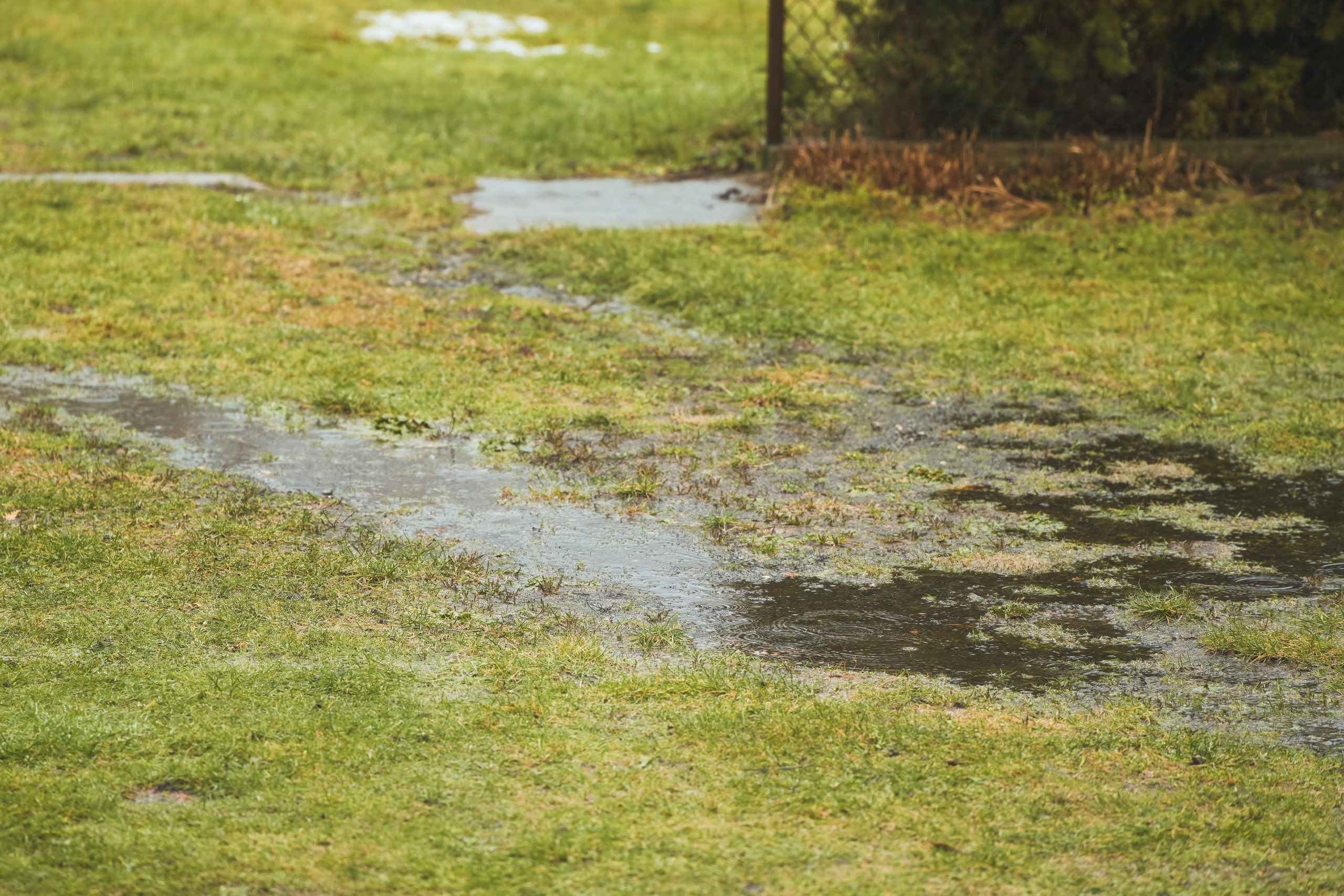
Water is the most common reason a driveway keeps sinking. Poor drainage saturates the subgrade and base, turning them into soup. Water follows the path of least resistance along drive edges, down low spots, or through a crushed culvert. Repeated wetting and drying pumps fine particles up into the stone and erodes support from below.
- Flat driveways with no crown collect puddles that soften the base.
- Clogged ditches and culverts trap water on the driveway side.
- Downspouts that discharge at the drive edge cause washouts.
Freeze, Thaw, and Frost Heave
Wisconsin winters are hard on driveways. When saturated soil freezes, it expands and lifts the surface. During thaw, the weakened soil collapses. If the base is not free draining and deep enough, the repeated cycles cause a driveway to settle unevenly year after year.
Edge Failures and Heavy Loads
Driveway edges are the first to unravel because there is less support from the sides. Turning wheels and heavy trucks push stone outward. Garbage trucks, delivery trucks, and construction equipment can crush a thin base and cause new low spots. If your driveway keeps sinking where large vehicles turn or park, the base is under built for those loads.
Hidden Voids and Utility Issues
Sometimes the cause is underground. A broken culvert can wash soil away. An abandoned drain tile can collapse. Burrowing animals can loosen soils. Old septic or irrigation lines can leak and saturate the base. These issues create voids and soft zones that make a driveway sink in the same spot repeatedly.
How to Diagnose a Sinking Driveway
You can identify the root cause with a few simple checks. The goal is to learn what is happening under the surface before you spend more on gravel that will not last.
- Map the problem areas. Mark ruts, potholes, and low spots after a rain. Measure how deep they are and how often they return.
- Check the crown and slopes. A healthy gravel driveway has a gentle crown of about 2 percent so water sheds to the sides. If yours is flat or saucer shaped, water will sit and soften the base.
- Probe the subgrade. Use a piece of rebar or a long screwdriver to test the firmness at several spots. If you can push it deep with moderate force, the soil is too soft.
- Dig a small test pit. In a low spot, dig down and look for distinct layers. Measure base thickness. Look for mud pumping into the stone or organic material that should have been removed.
- Inspect drainage. During or right after rain, watch where water flows. Check ditches and culverts for clogs, crushed sections, or reverse slopes.
- Trace roof and yard runoff. Find downspouts, sump discharge, or slopes that funnel water onto the driveway.
- Check for hidden systems. Call 811 before digging. Look for signs of past trenches that could be settling.
- Document traffic. Note where heavy vehicles turn, park, or brake. These areas may need stronger reinforcement.
RLP Diversified, Inc can perform a site assessment to confirm the cause and recommend a fix. Our grading and excavating teams handle this kind of evaluation across Wisconsin every week.
Proven Fixes That Last
Rebuild the Base With the Right Materials
The most reliable solution is to rebuild the base from the bottom up. This approach prevents the driveway from sinking again because it addresses the soil, the base, and the drainage together.
- Undercut soft spots. Excavate organic material and unstable soil until you reach firm ground.
- Install a geotextile separator. Place fabric over the subgrade to keep soil from mixing with the stone.
- Add a dense graded base. Use angular crushed stone with fines, often called traffic bond or 3/4 inch crushed with fines. Build it in 4 to 6 inch lifts and compact each lift at the right moisture level.
- Shape the crown and shoulders. Grade a 2 percent crown to shed water and build stable shoulders to support edges.
- Top with a wearing course. Add a final layer of well graded gravel for a smooth surface. Compact again.
RLP Diversified, Inc delivers the right aggregate for each layer through our Aggregate and Trucking service. We source topsoil, fill dirt, sand, stone, gravel, and limestone, and we place and compact it with Caterpillar, Bobcat, and New Holland equipment for a strong, even result.
Stabilize Weak Soils
If your subgrade is very soft, stabilization will prevent future settlement.
- Lime or cement treatment can stiffen clay and reduce moisture sensitivity.
- Geogrid reinforcement spreads loads over a wider area and reduces rutting.
- Over excavation and replacement with granular fill creates a firm foundation where organics or peat existed.
RLP Diversified, Inc has the grading and earthmoving expertise to evaluate soil conditions and apply the right stabilization method before rebuilding your driveway.
Fix Drainage Once and For All
Without proper water management, the best base will still fail. A permanent drainage plan keeps your driveway dry and stable.
- Regrade ditches so water flows away from the driveway.
- Replace or upsize culverts and add end sections for better flow.
- Install a French drain where groundwater seeps into the drive.
- Extend downspouts and reroute sump discharge away from the driveway.
- Cut shallow swales or build berms to divert hillside water.
As a full service contractor, RLP Diversified, Inc handles ditching, culverts, swales, and water redirection. Our pond excavating and shoreline protection experience translates into smart drainage solutions on land too.
If Your Surface Is Asphalt or Concrete
For paved driveways, the surface may be sound while the base is not. The repair depends on what we find during the assessment.
- For concrete slabs that dropped but are otherwise intact, slab jacking or polyurethane foam injection can raise and support them if the base is stable.
- For asphalt with shallow ruts, a mill and overlay may work only if the base is strong. If ruts reflect base failure, full depth patching or full replacement is needed.
- Edge restraints, proper jointing, and adequate base thickness protect against future cracking and sinking.
RLP Diversified, Inc also performs demolition and concrete recycling for driveways, foundations, parking lots, and roads, so we can remove failed sections and rebuild properly.
Protect Against Winter and Heavy Traffic
- Use a free draining base to reduce frost heave.
- Avoid heavy loads during spring thaw when the subgrade is soft.
- Maintain the crown and shoulders to keep water moving off the surface.
- Raise plow blades slightly to avoid shaving off the crown and fines.
Common DIY Mistakes That Make a Driveway Keep Sinking
- Dumping loose gravel on mud without undercutting soft spots.
- Using round river rock that will not lock together.
- Skipping geotextile on clay or organic soils.
- Ignoring drainage, ditches, and downspouts that feed water onto the drive.
- Filling potholes without squaring and compacting in lifts.
- Using too many fines that turn to mud in the rain.
Maintenance Plan for a Stable Gravel Driveway
A good build needs simple care to stay strong. Follow this plan and your driveway will resist ruts and potholes for years.
- Regrade each spring to restore the crown and clear ruts early.
- Top dress thin areas with the same quality material used in the base.
- Apply dust control like calcium chloride to help bind fines and reduce washout.
- Clean ditches and culverts at least twice a year and after big storms.
- Spot compact soft areas after heavy rain before they worsen.
- Keep shoulders built up so edges have support.
Why Wisconsin Homeowners Choose RLP Diversified, Inc
RLP Diversified, Inc has been building and repairing driveways across Wisconsin since 2000. Based in Burlington, we expanded in 2013 by integrating Andy’s Excavating, which grew our team and fleet. Today we serve Milwaukee, Waukesha, Madison, Racine, Mequon, Kenosha, Green Bay, and communities statewide.
We bring a complete set of services to every sinking driveway challenge so you get one accountable contractor and a result that lasts.
- Aggregate and Trucking: We deliver and place the exact mix your driveway needs, including topsoil, fill dirt, sand, stone, gravel, and limestone.
- Grading and Earthmoving: From rough cut to fine grading, we build correct slopes, crowns, and drainage paths for roads, highways, and residential drives.
- Pond Excavating and Shoreline Work: Our water management experience helps us solve runoff and erosion for driveways too.
- Excavating and Demolition: We undercut bad soils, remove failed sections, and recycle concrete when we rebuild.
Our crews use quality equipment from Caterpillar, Bobcat, and New Holland to compact, shape, and finish your driveway the right way. Whether your driveway keeps sinking because of weak soil, thin base, or bad drainage, we fix the cause, not just the symptoms.
What It Might Cost
Every site is different, but here is what drives cost. Simple surface grading and top dressing is the least expensive. It can help if the base is sound and drainage is good. If your driveway keeps sinking in the same spots, expect some level of undercut and base rebuild in those areas. Full depth reconstruction costs more but gives the longest life. Drainage work like ditching and culverts adds cost but often saves money over time by keeping the base dry. The best way to budget is to schedule a site visit. RLP Diversified, Inc will assess your driveway, explain options in plain language, and provide a clear, written proposal.
Quick FAQ: Driveway Keeps Sinking
Why does my driveway keep sinking after I add new gravel?
Because gravel only treats the surface. If the base is thin, the soil is weak, or drainage is poor, the gravel will keep pushing down into the soft layer and ruts will return.
Can I fix it without removing the old gravel?
Yes, if the gravel is clean and the base is solid. We can regrade, add the right material in lifts, and compact properly. If the base is failing, we need to undercut and rebuild those sections.
What gravel should I use?
Use angular, crushed stone with fines, often called traffic bond or dense graded base. Round rock does not interlock and will rut quickly.
Will geotextile fabric help?
Yes. A separator fabric keeps stone from mixing with soil and reduces rutting, especially on clay or organic subgrades.
Can I repair a sinking concrete or asphalt driveway without tearing it out?
Sometimes. If the slab is intact and the base is mostly sound, slab jacking or foam injection may work. If the base has failed, full depth repair is the correct approach.
How long should a rebuilt driveway last?
With a strong base, good drainage, and routine maintenance, a gravel driveway can perform well for many years. Paved surfaces last longer when built on a solid base and maintained properly.
Do I need a permit to fix my driveway?
It depends on your municipality and the scope of work, especially if you are changing a culvert, ditch, or driveway connection at the road. RLP Diversified, Inc can help you navigate local requirements.
Get Your Driveway Back on Solid Ground
If your driveway keeps sinking, stop spending on quick fixes. The solution is a stable base, proper compaction, and proven drainage. RLP Diversified, Inc has the equipment, materials, and experience to diagnose the cause and build a driveway that stands up to Wisconsin weather and traffic. We serve Milwaukee, Waukesha, Madison, Racine, Mequon, Kenosha, Green Bay, and the rest of the state. Contact us to schedule a site assessment and get a clear plan to fix it today.



Leave A Comment